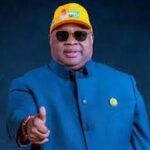



Osun Election Victory Sparks Fresh 2027 Political Calculations
Adeleke’s Victory Opens a New Chapter in Nigeria’s 2027 Political Race
The outcome of the 2026 Osun State governorship election has triggered a fresh wave of political discussions across Nigeria, with attention already shifting from the Osun result to what it could mean for the 2027 general elections.
Governor Ademola Adeleke of the Accord Party was declared the winner of Saturday’s governorship election after defeating the All Progressives Congress (APC) candidate, Bola Oyebamiji. Adeleke’s victory secured him another term in office and delivered a major electoral setback to the APC in a state where the party had been seeking to regain control.
The result has quickly become more than just a state-level political development. Political parties, opposition figures and supporters of different political camps are examining the election for possible lessons about voter behaviour, party strength, alliances and the importance of grassroots mobilisation ahead of 2027.
Opposition Figures React
Several prominent political figures have congratulated Adeleke following his victory.
Former Vice President Atiku Abubakar and former Anambra State Governor Peter Obi were among those who publicly congratulated the Osun governor and commended voters following the election. Their reactions have added to the wider political discussion surrounding the result.
The reaction is significant because both Atiku and Obi are prominent figures in Nigeria’s emerging opposition politics ahead of 2027. Their responses show that the Osun election is being closely watched beyond the borders of the state.
Is Osun a Warning Sign for the APC?
The APC entered the Osun election hoping to defeat the incumbent and return the state to its control.
Adeleke’s victory therefore represents an important result for the opposition and raises questions about how the APC will approach future elections.
Some political groups have already described the result as a warning to the ruling party ahead of 2027. The Allied People’s Movement, for example, argued that the outcome could signal growing dissatisfaction with the APC and President Bola Tinubu’s administration. However, such interpretations remain political opinions rather than proof of what will happen in the 2027 presidential election.
Tinubu and Adeleke’s Political Relationship
Another interesting element of the Osun aftermath is the political relationship between President Bola Tinubu and Governor Adeleke.
Recent reports indicate that Adeleke has backed Tinubu for the 2027 presidential election, while his campaign council has rejected claims that the governor’s position was based on a political agreement with the President.
This has created an unusual political situation: Adeleke has won a major election against an APC candidate while also publicly supporting Tinubu’s bid for another presidential term.
That development could make Adeleke an important political figure to watch as Nigeria moves closer to 2027.
What Does Osun Really Tell Us About 2027?
It would be too early to conclude that the Osun result will determine the outcome of the 2027 presidential election.
Osun is only one state, and governorship elections are different from presidential elections. Voters may also make different choices depending on the candidates, political alliances and issues involved.
Nevertheless, the election provides political parties with valuable information.
For the APC, the result could lead to renewed discussions about its grassroots structure, candidate selection, campaign strategy and ability to retain support outside areas where it has traditionally performed strongly.
For opposition parties, Adeleke’s victory provides encouragement that an incumbent backed by a strong grassroots campaign can defeat a major national political party.
Opposition Unity Could Become a Major Factor
One of the biggest questions heading toward 2027 is whether opposition politicians can maintain a united front.
Atiku Abubakar, Peter Obi and other opposition figures have been involved in broader discussions about cooperation ahead of the next presidential election. The ability of opposition politicians to coordinate their interests could become an important factor in determining how competitive the 2027 race becomes.
However, political alliances in Nigeria can change quickly. Personal ambitions, party structures, regional considerations and the choice of presidential candidate could all influence whether opposition groups eventually remain united.
The APC Still Has Time to Respond
Despite the political excitement surrounding Adeleke’s victory, the Osun result does not mean the APC has lost its national advantage.
President Bola Tinubu remains the incumbent president, and the APC has a national political structure that extends across Nigeria.
The result instead gives the party another reason to examine its performance and determine what adjustments may be necessary before the next general election.
The real significance of Osun may therefore become clearer over the coming months as political parties begin strengthening their campaigns and negotiating alliances.
The Bigger Picture
The Osun election has demonstrated that Nigerian voters remain capable of producing closely watched and competitive electoral outcomes.
Adeleke’s victory has energized his supporters, encouraged opposition figures and created new questions for the APC.
But whether Osun becomes a genuine blueprint for 2027 or simply remains a significant state-level election will depend on what happens next.
One thing is already clear: the political conversation surrounding Nigeria’s 2027 election has become even more intense following the Osun result.