



igeria’s $50 Billion Deep-Offshore Oil Push: What Tinubu’s New Investment Framework Means
Tinubu’s New Offshore Framework Targets Billions in Investment and Long-Delayed Oil Projects
Nigeria is stepping up efforts to attract fresh investment into its deep-offshore oil and gas industry after President Bola Ahmed Tinubu approved a new investment framework that the Federal Government says could unlock up to US$50 billion in new investment.
The framework, announced by the Presidency on August 11, 2026, is designed to replace project-by-project negotiations with a more predictable, rules-based system for qualifying deep-offshore developments.
The government says the reform is aimed at improving investor confidence, reviving oil projects that have remained stalled for years and making Nigeria more competitive in the global race for energy investment.
Why Nigeria Is Making the Move
Nigeria remains one of Africa’s major oil-producing countries, but attracting large-scale upstream investment has become increasingly difficult.
High project costs, regulatory uncertainty and competition from other oil-producing countries have affected the pace of new offshore developments.
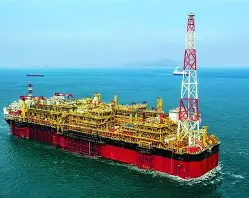
Deepwater projects are particularly expensive because they require major investments in subsea infrastructure, floating production facilities, drilling and other specialised equipment.
The Federal Government therefore wants to create clearer financial and regulatory conditions that can make these projects more attractive to international oil companies and investors.
Under the new approach, qualifying projects will operate under a standard framework rather than relying heavily on individual negotiations with government.
The $50 Billion Investment Target
The headline figure surrounding the reform is $50 billion.
However, this should not be interpreted as Nigeria having already secured $50 billion in new investment.
The figure represents the potential investment that the government hopes the new framework can unlock across multiple deep-offshore developments.
That distinction is important.
Actual investment will depend on companies making final investment decisions, securing financing, approving project plans and beginning development.
The government is essentially creating conditions intended to encourage investors to move forward with projects that have previously been delayed.
Bonga South West Could Be One of the First Major Projects
One of the projects specifically highlighted under the new framework is Bonga South West.
The project has been described by the Presidency as an approximately $10 billion development, making it one of the major offshore projects that could benefit from the new investment regime.
Its progress will therefore be closely watched by investors and the Nigerian oil industry as evidence of whether the new framework can actually translate into major project activity.
If projects such as Bonga South West move forward successfully, the government could gain additional confidence that its new approach is producing the desired results.
Moving Away From Project-by-Project Negotiations
A major feature of the new framework is its move away from project-specific negotiations.
The Federal Government says the new system establishes clearer and more transparent rules for qualifying offshore developments.
For investors, predictability is particularly important when dealing with projects that can require billions of dollars and many years before production begins.
Companies need to have a clearer understanding of the fiscal and regulatory environment before committing such large amounts of capital.
The government believes the new framework can provide that greater certainty.
What Could Nigeria Gain?
If the framework succeeds in attracting the investment being targeted, the potential benefits could extend beyond the oil companies themselves.
Large offshore projects can create opportunities for Nigerian contractors, engineering companies, logistics providers and other businesses within the oil and gas supply chain.
The projects could also create employment opportunities and generate government revenue through taxes, royalties and other payments.
Increased offshore production could further strengthen Nigeria’s position as an oil producer and potentially support the country’s foreign-exchange earnings.
However, the scale of these benefits will depend on how quickly the projects move from investment plans to actual development and production.
Government Wants More Nigerian Participation
The new framework is also being presented as an opportunity to strengthen Nigerian participation in the offshore oil industry.
That could create opportunities for indigenous companies to participate in engineering, logistics, fabrication, maintenance and other services connected to major offshore developments.
The broader objective is not simply to bring foreign capital into Nigeria but to ensure that the investment generates wider economic activity within the country.
The Challenge: Turning Announcements Into Projects
Despite the optimism surrounding the $50 billion figure, significant challenges remain.
The most important test will be whether international oil companies actually commit capital and begin developing the projects covered by the new framework.
Nigeria has previously announced initiatives aimed at attracting upstream investment, but some major projects have remained delayed because of costs, regulatory concerns and commercial considerations.
This means the success of the new framework will ultimately be measured not by the size of the announced investment target, but by the number of projects that reach final investment decisions, construction and eventually production.
What It Means for Nigeria’s Oil Industry
The offshore sector remains strategically important to Nigeria because much of the country’s future oil-production potential is tied to major offshore developments.
Reviving stalled projects could help sustain production levels and provide a new wave of activity for the oil and gas industry.
It could also strengthen Nigeria’s position at a time when oil-producing countries around the world are competing for increasingly selective international investment.
The government is therefore betting that a clearer fiscal and regulatory environment can convince investors that Nigeria remains a viable destination for long-term offshore capital.
What Nigerians Should Watch Next
The next major developments will be whether companies begin announcing concrete investment decisions under the new framework.
Attention will also be focused on Bonga South West and other delayed offshore projects that could benefit from the new incentives.
If major projects begin moving forward, the $50 billion target could become an important turning point for Nigeria’s upstream oil industry.
If investment remains slow, however, questions will arise over whether the new framework is sufficient to overcome the commercial and operational challenges facing deepwater developments.
For now, the Federal Government has made its position clear: Nigeria wants to make its deep-offshore oil sector more attractive to global investors and unlock a potential pipeline of up to $50 billion in investment.
The real test begins with turning that ambition into actual projects, jobs, production and economic value for Nigeria.
