


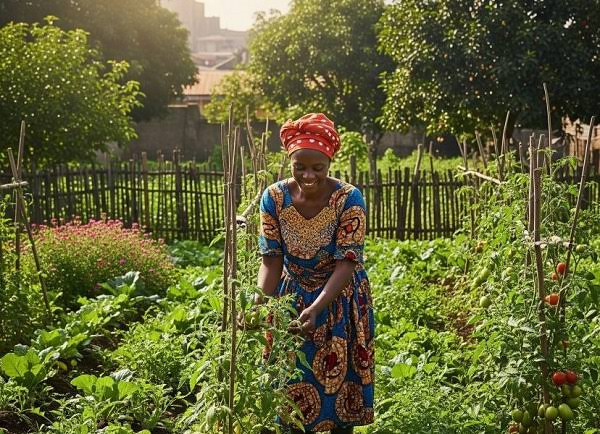
Federal Government Intensifies Food Security Programmes to Boost Agricultural Production
The Federal Government has reaffirmed its commitment to strengthening Nigeria’s food security through a series of initiatives aimed at increasing agricultural production, supporting farmers, and reducing the rising cost of food across the country. As part of its broader economic reform agenda, the government says it is expanding investments in agriculture to ensure that Nigerians have access to affordable food while improving the livelihoods of millions of farmers.
Government officials explained that food security remains one of the administration’s top priorities, particularly in the face of inflation, climate-related challenges, and disruptions affecting agricultural productivity. To address these issues, the Federal Government is implementing policies designed to improve food production through expanded access to farm inputs, agricultural financing, irrigation development, mechanization, and modern farming technologies.
One of the key components of the programme is increased support for smallholder farmers, who account for the majority of food production in Nigeria. The government has pledged to provide improved seedlings, fertilizers, farming equipment, and extension services to help farmers increase crop yields and improve productivity. Access to affordable credit through agricultural financing schemes is also expected to enable farmers to expand cultivation and invest in modern farming practices.
The Federal Government is equally prioritizing irrigation projects to reduce dependence on seasonal rainfall and encourage year-round farming. Officials believe that expanding irrigation infrastructure will significantly increase food production, particularly in regions with suitable agricultural land but limited access to water resources. Improved irrigation is also expected to reduce the impact of climate change and unpredictable weather patterns on crop production.
In addition, authorities are promoting greater private sector participation in agriculture by encouraging investments in food processing, storage facilities, transportation, and agricultural value chains. These efforts are intended to reduce post-harvest losses, improve market access for farmers, and strengthen Nigeria’s overall food supply system.
The government also noted that improving rural infrastructure, including roads and electricity, will make it easier for farmers to transport produce to markets, reduce production costs, and increase profitability. Officials stressed that sustainable agricultural development requires coordinated investments across multiple sectors to support the entire food production process.
Agricultural experts have welcomed the renewed focus on food security but emphasized the need for consistent implementation of government policies. They noted that ensuring timely distribution of farm inputs, expanding access to finance, strengthening security in farming communities, and addressing climate-related risks will be essential for achieving long-term improvements in food production.
The Federal Government expressed confidence that the ongoing initiatives will help stabilize food prices, reduce dependence on food imports, create employment opportunities, and enhance Nigeria’s economic growth. Officials maintained that achieving national food security requires collaboration between government agencies, farmers, financial institutions, development partners, and the private sector.
As Nigeria continues to address inflation and rising food costs, stakeholders believe that sustained investment in agriculture remains one of the most effective strategies for ensuring food availability, improving rural incomes, and strengthening the country’s economy for future generations.