



The Abuja Meeting: A Political Warning Governor Bago and APC Leaders Should Not Ignore
Politics is not only about winning elections; it is about sustaining unity, rewarding loyalty, and managing the interests of party stakeholders. Political leaders who fail to appreciate this reality often discover, sometimes too late, that impressive performance in government alone cannot guarantee political success.
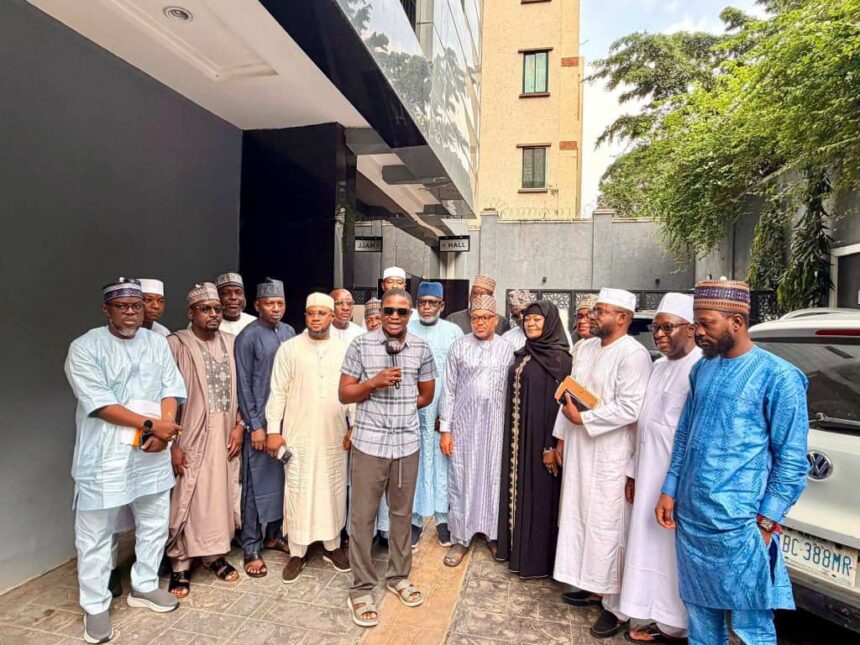
The recent meeting in Abuja involving APC House of Representatives aspirants from Niger State who were affected by the party’s consensus arrangement should therefore be seen as a serious political development. Whether the meeting was intended to review the outcome of the primaries or to discuss the way forward, one fact remains clear: whenever prominent party stakeholders converge after a contentious primary process, it is a signal that unresolved issues still exist within the party.
As a Public and Political Affairs Analyst and Good Governance Advocate, I believe this development should not be dismissed by Governor Mohammed Umaru Bago or the leadership of the All Progressives Congress (APC) in Niger State. Rather, it should serve as an opportunity to strengthen internal unity before political differences widen into avoidable divisions.
It is on record that several aspirants stepped down during the party’s primary process under the consensus arrangement, largely in deference to the wishes of Governor Bago and the party leadership. They made sacrifices in the interest of party unity, believing that their loyalty and commitment would be appreciated and that whatever assurances were given during the process would be respected.
However, the apparent dissatisfaction among many of these aspirants suggests that the expected reconciliation has either not taken place or has not been sufficiently effective. Their coming together in Abuja should therefore be interpreted as an indication that many of them still have unresolved concerns requiring urgent political attention.
The APC leadership must understand that these aspirants are not ordinary party members. They are respected politicians with established political structures across their various federal constituencies and local government areas. Each of them commands loyal supporters who invested time, resources, and political energy in preparation for the primaries. Ignoring their concerns may have consequences beyond the individuals themselves, as their supporters constitute an important part of the party’s grassroots strength.
I had previously appealed to respected APC leaders in Niger State, including former governors and influential party elders, to immediately establish a high-powered reconciliation committee to engage all aggrieved aspirants and fulfil genuine commitments made during the consensus process. Unfortunately, little has been seen in that regard. Political silence is often interpreted as indifference, and indifference can easily breed mistrust.
Governor Mohammed Umaru Bago deserves commendation for his developmental strides, particularly in infrastructure, agriculture, and other sectors. His administration has demonstrated commitment to transforming Niger State. Nevertheless, governance and politics are two sides of the same coin. Development projects earn public recognition, but political inclusion and stakeholder management sustain electoral victories.
History offers valuable lessons that should never be ignored. In Kano State, former Governor Engr. Rabiu Musa Kwankwaso recorded remarkable achievements in infrastructure and education during his first tenure. Yet, despite those accomplishments, political disagreements and inadequate reconciliation with critical stakeholders contributed to his defeat by Malam Ibrahim Shekarau in the 2003 governorship election. The lesson is simple: good governance alone does not automatically translate into electoral success when internal party cohesion is weakened.
Governor Bago should therefore see the Abuja meeting as an early warning rather than an act of defiance. The strength of any political party lies not only in its achievements in government but also in its ability to keep its members united, motivated, and respected. Every aggrieved stakeholder who is genuinely reconciled becomes an asset, while every neglected stakeholder has the potential to weaken the party’s political structure.
There is still enough time for the APC leadership in Niger State to address these concerns through sincere dialogue, fairness, and inclusiveness.
Reconciliation should go beyond rhetoric; it should involve practical steps that restore confidence and reassure party members that their sacrifices are appreciated.
As the saying goes, “A stitch in time saves nine.” Political disagreements are easier to resolve today than during election campaigns. The Abuja meeting should therefore be regarded as a timely reminder that unity remains the greatest strength of any political party.
Governor Bago has the opportunity to combine developmental achievements with sound political management. If he succeeds in doing both, he will not only strengthen his administration but also enhance the APC’s chances of remaining united and electorally competitive in the years ahead.
The warning signs are visible. The time to act is now.
Written by:
Alh. Lawal Ibrahim, FCAI
Public and Political Affairs Analyst
Political Commentator and Good Governance Advocate
Email: lawal65@gmail.com

