


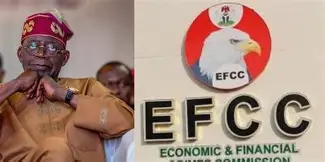
Tinubu reportedly orders EFCC to unfreeze Osun State accounts
Reports from several Nigerian media outlets indicate that President Bola Tinubu has directed the Economic and Financial Crimes Commission (EFCC) to lift the freezing order placed on the bank accounts of the Osun State Government. According to the reports, the President expressed dissatisfaction with the action, describing it as “embarrassing” and stressing that federal institutions should carry out their responsibilities professionally, fairly, and in accordance with the law. Although there has not been an official statement from the Presidency confirming the details of the directive, the development has generated widespread public and political discussion.
The controversy began after the EFCC reportedly froze several Osun State government accounts as part of an investigation into alleged financial irregularities. The action raised concerns about the state’s ability to meet key financial obligations, including the payment of workers’ salaries, pensions, and funding for essential public services. Officials of the Osun State Government criticized the move, arguing that it disrupted governance and negatively affected the delivery of public services to residents.
Media reports claim that President Tinubu intervened after being briefed on the matter, emphasizing that while anti-corruption agencies must remain independent in carrying out investigations, their actions should not unnecessarily disrupt the functioning of democratically elected state governments. The President reportedly reaffirmed his administration’s commitment to fighting corruption but stressed that investigations should be conducted within the limits of the law and with due regard for the public interest.
Political analysts have described the reported intervention as an attempt to balance the government’s anti-corruption agenda with the need to ensure uninterrupted governance. They noted that freezing a state’s operational accounts can have significant economic and administrative consequences, particularly if it affects salary payments and essential government services.
As of now, the EFCC has not publicly issued a detailed explanation regarding the reported lifting of the restriction. Observers expect further clarification from both the Presidency and the anti-graft agency in the coming days regarding the legal basis of the action and the status of the ongoing investigation.