


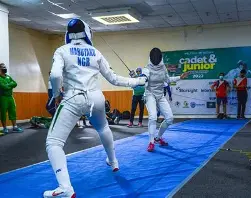
🇳🇬 NIGERIA’S FENCING TEAM GETS SPORTS COMMISSION SUPPORT
NSC Backs Fencing Programme After Nigeria’s Strong Performance at 2026 Commonwealth Games
Nigeria’s fencing programme has received a boost after the National Sports Commission (NSC) pledged continued support for the development of the sport following the country’s performance at the 2026 Commonwealth Games.
The commitment comes as the NSC looks to strengthen sports programmes that have shown potential to compete successfully on the international stage.
The development has generated optimism within Nigeria’s fencing community, where athletes and officials have continued to push for greater investment, better preparation and improved access to international competitions.
NSC Signals Stronger Support for Fencing
The National Sports Commission’s support is significant because fencing has historically received less attention in Nigeria than sports such as football, athletics, boxing and wrestling.
Greater institutional backing could provide opportunities for athletes to receive better training, participate in more international competitions and gain access to improved coaching and equipment.
The NSC’s position also reflects a broader effort to identify sports where Nigeria can compete effectively at international competitions.
Why the Commonwealth Games Matter
The 2026 Commonwealth Games provided an important platform for Nigerian athletes across several sporting disciplines.
For fencing, competing at a major international multi-sport event gives Nigerian athletes valuable experience against competitors from other countries.
International exposure can be particularly important for developing athletes because it allows them to understand the standard required at the highest level and identify areas where they need to improve.
The experience gained at competitions such as the Commonwealth Games can therefore contribute to the long-term development of Nigeria’s fencing programme.
Fencing Needs More Than Competition
For Nigeria to become a stronger fencing nation, experts and athletes need more than occasional participation in international competitions.
Consistent training programmes, qualified coaches, modern equipment and regular international exposure are all important.
Fencing is a technical sport that requires athletes to develop speed, timing, coordination and tactical awareness.
Without consistent preparation, athletes can struggle to compete against countries with established fencing systems.
That is why the NSC’s latest commitment could be important if it leads to sustained investment rather than short-term support.
Opportunity for Young Nigerian Athletes
The growth of fencing could also create opportunities for young Nigerians interested in less traditional sports.
With greater awareness and institutional support, more schools and sports academies could introduce young athletes to fencing.
A wider talent pool would give Nigeria a better chance of identifying athletes capable of competing at continental and global championships.
It could also help create a stronger domestic competition structure.
The Importance of Equipment
Equipment is another major factor in fencing.
Athletes require appropriate protective clothing, weapons and scoring equipment to train and compete safely and effectively.
Access to quality equipment can be particularly challenging for developing sports programmes.
Greater government and federation support could help Nigerian athletes train under conditions closer to those available to their international competitors.
International Competition Remains Important
Nigeria’s fencing programme will also need regular participation in international events if the country wants to maintain momentum.
International competitions expose athletes to different styles and tactical approaches.
They also provide ranking opportunities and experience that cannot easily be replicated through domestic competitions alone.
For young fencers, competing internationally can accelerate their development and help them build confidence.
Can Nigeria Become a Fencing Power?
Nigeria has already demonstrated that it can produce successful athletes in sports outside football.
The country has built strong traditions in athletics, wrestling, boxing and weightlifting, among others.
Fencing presents another opportunity.
With proper investment and long-term planning, Nigeria could potentially develop a stronger presence in African and Commonwealth fencing competitions.
However, that will require sustained support from government, sports administrators, sponsors and private organisations.
What the NSC Support Could Mean
The latest pledge could represent an important step for Nigerian fencing.
If properly implemented, support could help improve athlete preparation, coaching, equipment, competition exposure and talent development.
The biggest test will be whether the support continues beyond one major competition.
For Nigerian athletes, long-term development is more valuable than one-off funding before an international event.
Looking Ahead
The performance at the 2026 Commonwealth Games has given Nigeria’s fencing programme another opportunity to attract attention.
The NSC’s pledge of support could now help turn that attention into a more structured development programme.
For the athletes involved, the message is clear: there is growing recognition that fencing can contribute to Nigeria’s international sporting success.
The next challenge will be transforming that recognition into consistent training, better facilities, stronger competitions and more international opportunities.
If that happens, Nigeria’s fencing programme could become one of the country’s emerging sporting success stories.